By Morg Bode
On September 4, 1838, a tragedy now known as the Potawatomi Trail of Death commenced. Nearly 900 Potawatomi were led on a forced march at the order of Indiana governor David Wallace from their indigenous homelands in Indiana to an unknown reservation in Kansas. The Trail was brutal, the Potawatomi travelling an average of over ten miles a day in bleak conditions. Dozens of people died.
A diary in the ALPLM collection offers a glimpse of the grim parade of Potawatomi as they passed through Springfield. It was recorded by a stonemason working on what would be the state’s brand-new capitol building. But first, a little background about the removal of Potawatomi people from their homes.
The origins of the removal can be traced to 1832, when President Andrew Jackson and the Indiana legislature created a treaty which significantly reduced the amount of land under the control of Potawatomi Chief Menominee. Around the same time, Catholic missionaries began arriving on Potawatomi land. While their intentions to convert the indigenous people were paternalistic, they fought against the removal monetarily, legally and spiritually.
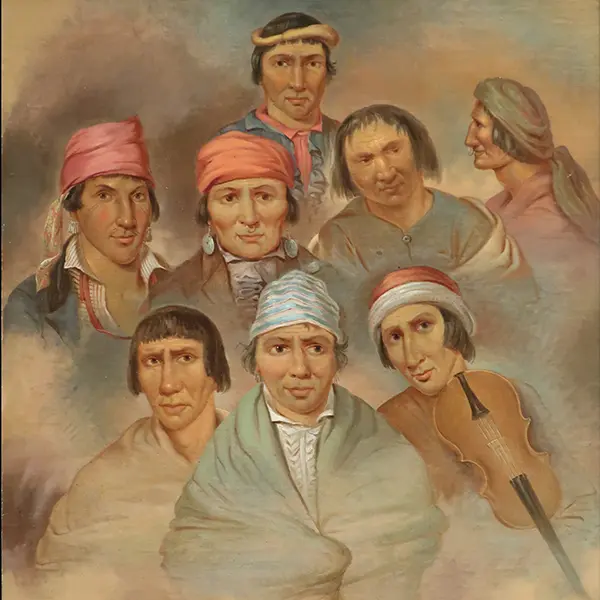 "Eight Potawatomi Natives" (1837) by George Winter. (via Wikimedia Commons)
In 1836, several treaties were presented to the federal government, indicating that the Potawatomi agreed to sell their land. The most significant of these treaties purported to be signed by 26 Potawatomi leaders. Objections quickly followed, from leaders saying they were, in fact, working in their fields at the time of the signing.
What is uncontested is that Chief Menominee never signed the 1836 treaty. It was clear to all that he and his people had no intention to remove from their ancestral lands.
The fraudulent treaty gave the chiefs two years to prepare the tribe for removal. They did not make those preparations, believing their protests against the treaty would be recognized as the truth. They were wrong. Devastatingly, between Aug. 31 and Sept. 3, 1838, nearly 900 Potawatomi were forcibly rounded up by the militia. Their homes were destroyed, and they were gathered into a small camp with 286 of their horses. The march to Kansas began on Sept. 4.
The Potawatomi entered Illinois on Sept. 16 and camped at Danville their first night. Just on that day, four people died. The tribal leaders were intentionally separated from their people, surely causing pain and confusion. Three chiefs were being kept in a “jail wagon,” although a Catholic priest with them, Father Benjamin Marie Petit, did eventually negotiate their release. Petit spent much of his time baptizing the babies born along the Trail, many of whom were too weak to survive.
Unfortunately, historians do not know the names of most of those killed by the Trail of Death. Written records of the event often center the experiences of the militia, the Catholic priests, or the otherwise non-indigenous observers of the event. We do know that at least one chief, Chief Muk-Kose, died in Illinois on the way to the camp in Sidney, near present-day Champaign.
Water was scarce and illness rampant for most of the Trail. The Potawatomi were occasionally allowed to hunt or forage at multi-day camp stays, but there were never enough supplies for the group. The removal had occurred very shortly before the corn harvest, which left them unprepared for the march, and the winter ahead. Settlers stole this resource.
As the group prepared to pass through Springfield, conductor William Polke gave thought to the image of bedraggled Potawatomi men, women and children trudging through one of the largest cities along the route. He told Chief I-o-we that if he could “arrange and accouter the Indians as to insure a good appearance,” they would be given tobacco in return.
This is when Jared P. Irwin, a stonemason and builder in Springfield who helped construct what is now known as the Old State Capitol, witnessed the Trail of Death passing through his city. The Abraham Lincoln Presidential Library has his diary in the manuscripts collection.
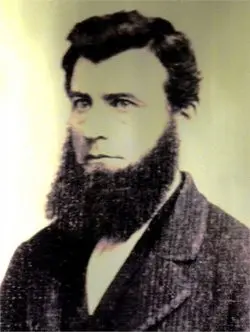 Irwin (via FindAGrave.com)
He described the march this way:
“September 30, 1838
Today, a remnant of the Tribe of “Potawatomie” Indians, passed through town on their journey to their new homes west of the Mississippi.
Thus the poor creatures are compelled to leave the Land of their fathers – their hunting ground, and all that is near and dear to them, in exchange for (to them) an unknown country, and this too. By an act of the General Government, – The number was about 800 souls, each one having a horse, save the sick, they being in wagons.”
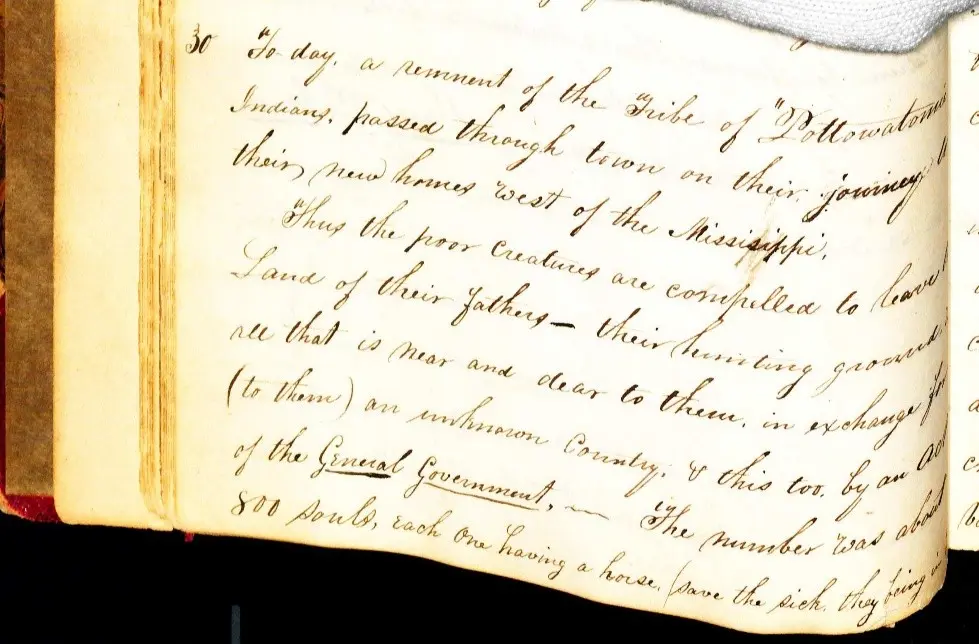 Irwin's diary (ALPLM)
Evidently, Polke’s attempt at distracting from the devastation the militia had wrought was unsuccessful. Observers could clearly see the injustice of the march and the sickness pervading the group.
Several members of the tribe did escape the Trail, but it must have been a very difficult decision to leave the group behind to protect themselves. Families and other bonds were irrevocably damaged. On Oct. 1, Jesse C. Douglass, the secretary to the removal operation, recorded in his journal that a child fell out of a wagon and was crushed under its wheels on the way to the Jacksonville camp. Although the entry indicated that Jesse believed the child would die, no record of what happened to him after this exists.
On Oct. 10, the Trail of Death left Illinois, but the march continued until Nov. 4, when the Potawatomi arrived in Kansas. More than 40 Potawatomi had died during the 61-day march. Father Petit died shortly after, from an illness contracted on the march.
With limited supplies and traumatized from their journey, the survivors prepared as best they could for the rapidly approaching winter. Sugar Creek was the name of their final encampment-turned-mission. They hung blankets from the craggy rock of the valley they were forced into and hoped to survive the elements. In the next 10 years, over 600 tribe members died at Sugar Creek from disease, exposure, and lack of resources.
 Two Potawatomi women and a boy in traditional clothing, circa 1920 (National Archives)
The legacy of removal policies like the Trail of Death can still be felt today. Illinois is haunted by its own enforcement of removal, and of compliance with federal policies. Although Illinois is the ancestral home of many Native American tribes, there were no federally recognized tribes or tribal lands in the state until 2024. On April 19, 2024, the Potawatomi were federally recognized as a tribe in Illinois and were given a small amount of land back in Shabbona Lake State Park.
Bode is the ALPLM reference librarian.