The crew of the USS Lincoln have been in the news lately for their extraordinarily long deployment, which included duty near the Strait of Hormuz. The ship’s account on X (formerly Twitter) says it traveled more than 85,000 nautical miles since leaving San Diego in November. That’s the equivalent of nearly four trips around the planet. The ship operated for months without a port call, putting tremendous strain on the men and women serving aboard. The Abraham Lincoln is now on its way home, and we wish a safe journey to everyone aboard.
Seeing the ship in the news reminded us that several members of the USS Abraham Lincoln contributed to a project to mark the 150th anniversary of the Gettysburg Address, back in 2013. It was called “272 Words” because Lincoln’s address was only 272 words. We asked people from all walks of life to submit 272-word essays about Lincoln, his famous speech and what it meant to them.
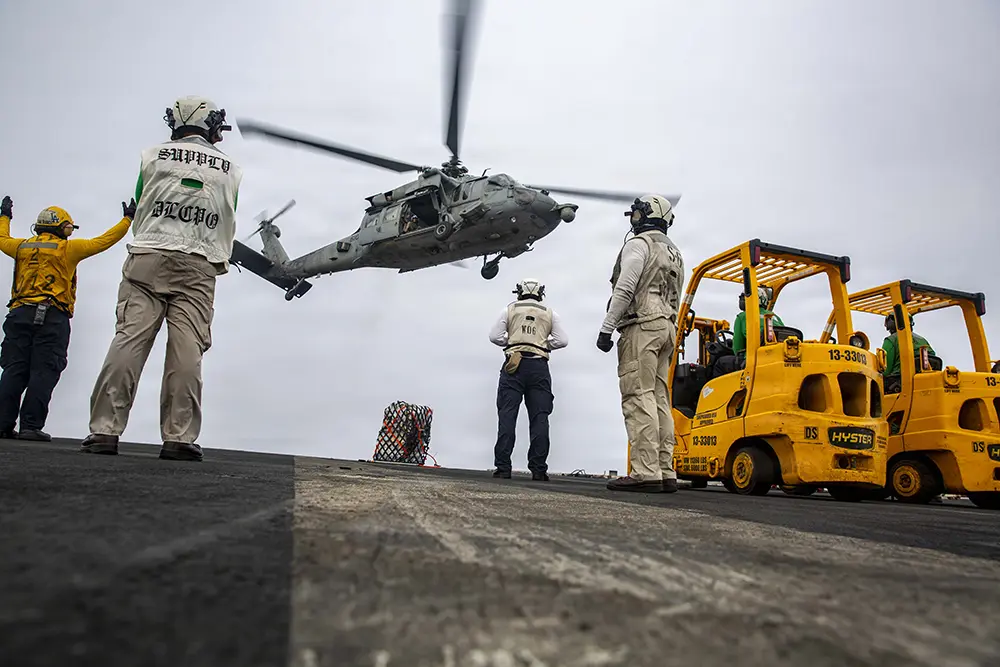
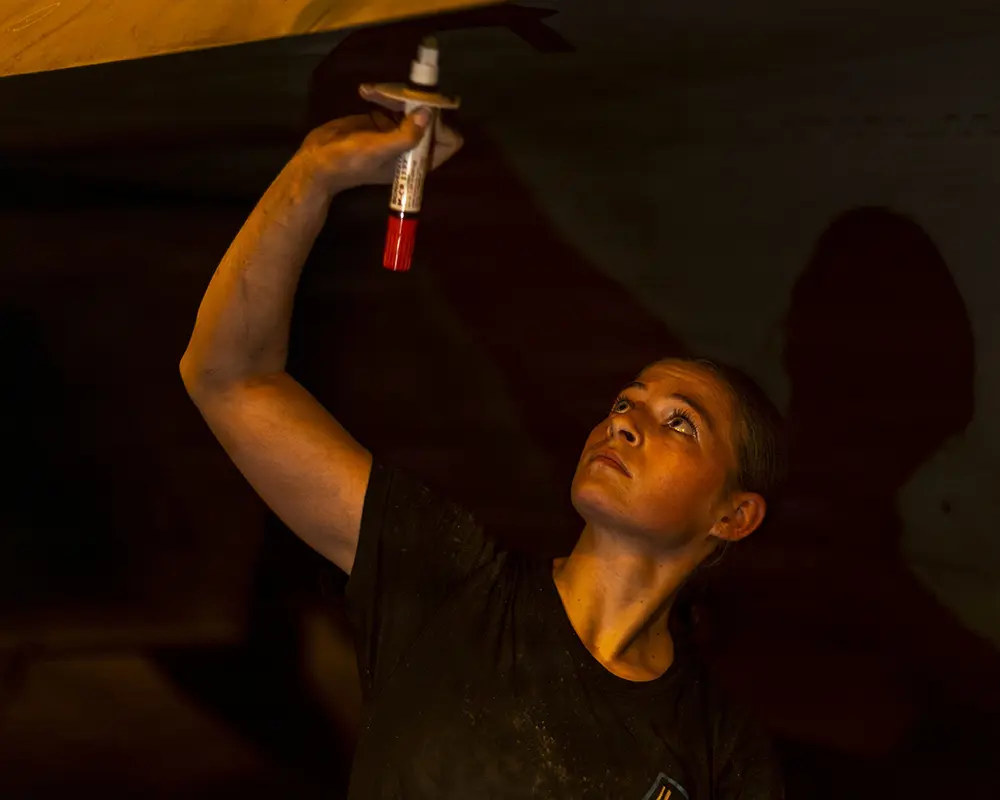
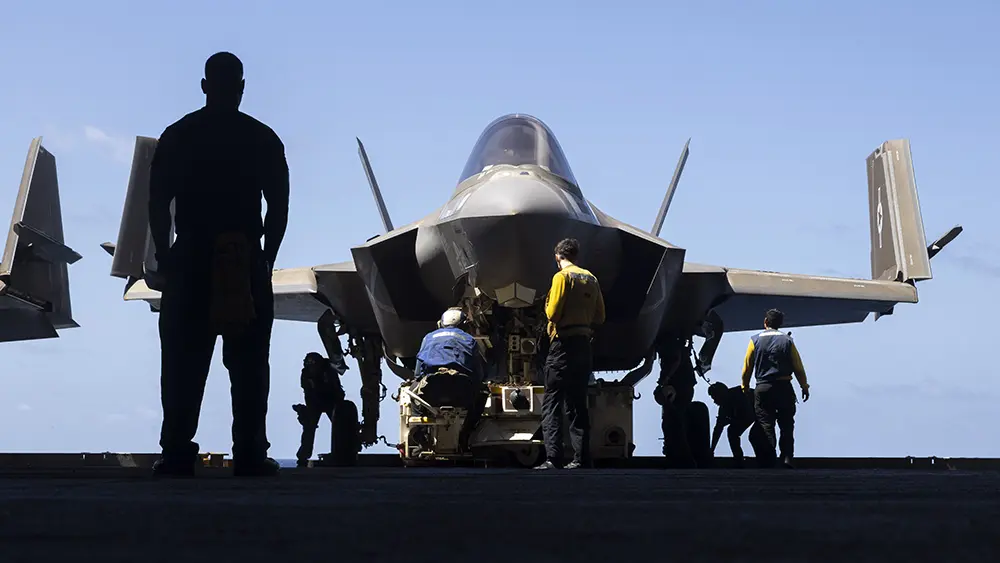
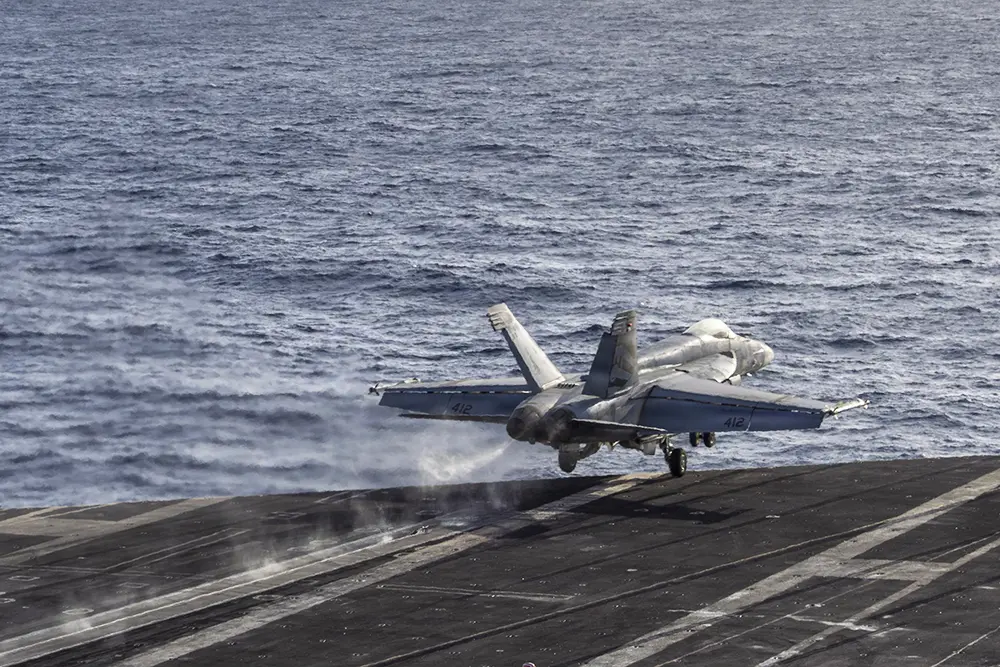
Here are selections from the essays written back then by USS Abraham Lincoln crew members, along with some Navy photos of life aboard the Lincoln.
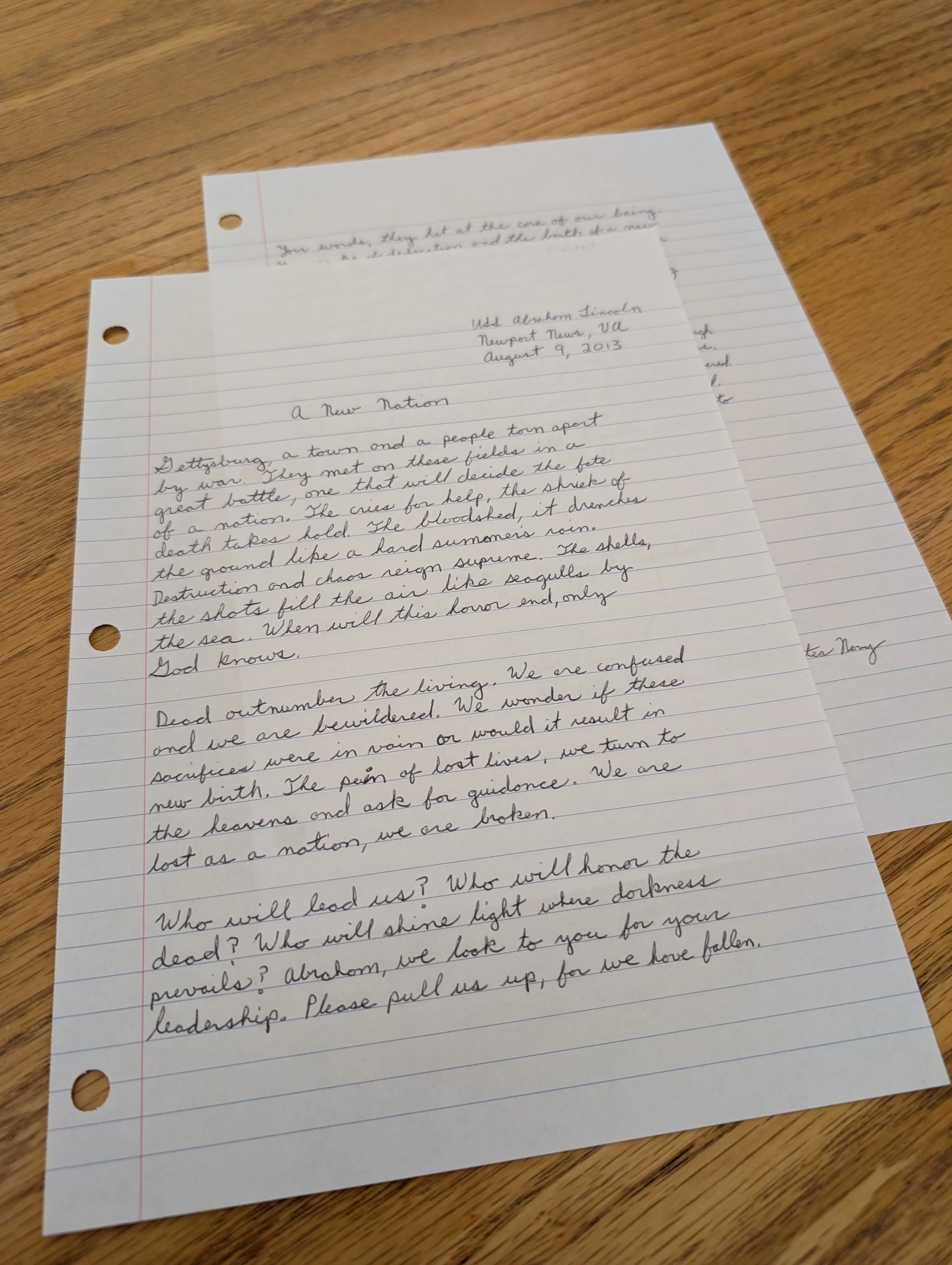
Several crew members remarked on Lincoln’s lack of formal education. Zachery Welch was one of them.
“I serve on an aircraft carrier that bears the name of the author of the Gettysburg Address, Abraham Lincoln. I find it amazing that the Gettysburg Address was written by a man who had minimal schooling. … Lincoln proposed that our country being torn apart was a shot for America’s citizens to actually affect change. A pretty impressive feat for a man who was self-educated.”
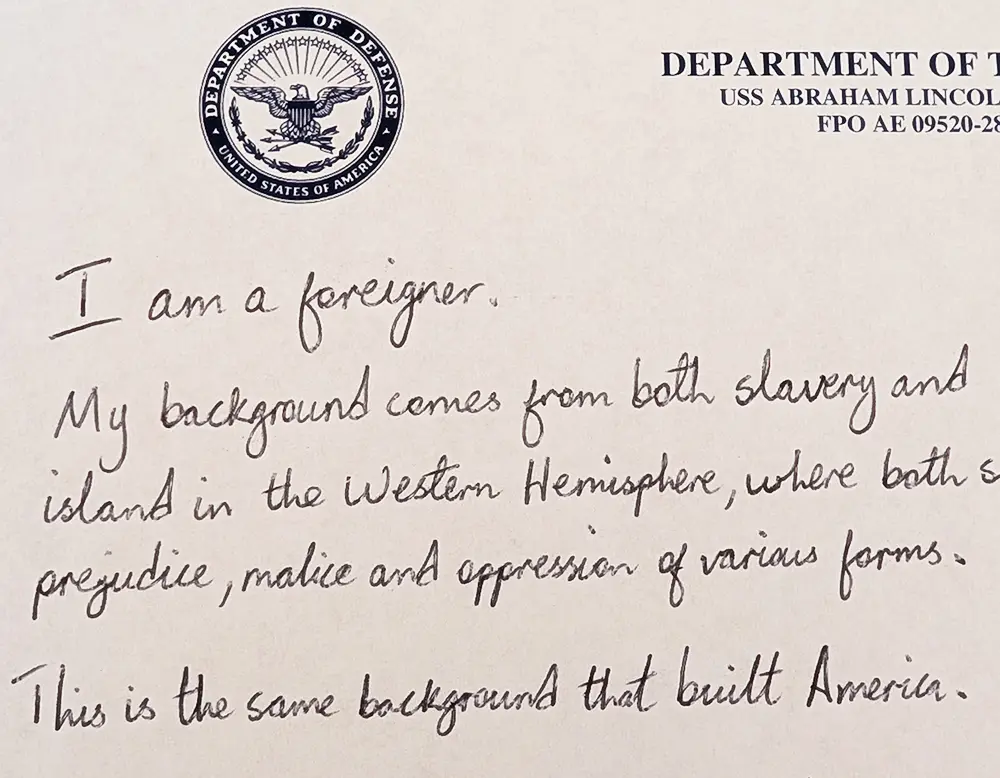
Another sailor (we’re omitting his name because we don’t know his immigration status and don’t want to cause him any trouble) saw connections between America’s history of slavery and his own personal history.
“I am a foreigner. My background comes from both slavery and indentured labor in a former colonial island in the Western Hemisphere, where both sides of my family endured racism, criticism, prejudice, malice and oppression of various forms. This is the same background that built America.
“I see the same system present in today’s social, political and economic structure. It gives me great hope, however, that even though some people still uphold the belief that others are not equal to them, the majority of people that I meet and that I know, do not think that way.”
Michael Raney remarked on Lincoln’s impact and his place in American memory.
“His efforts to bring freedom and equality to all people changed the nation and placed him as a national hero in the hearts and minds of all Americans after him.”
Lincoln’s speech reminded Jeremiah Mills of the many people who helped create a country that aspired to offer justice and opportunity.
“I imagine America’s forefathers clearly envisioning a brilliant future for our country, one of civility and reason. I am inspired by the notion that our past leaders, men such as Abraham Lincoln, had these principles of justice and reason in mind.”
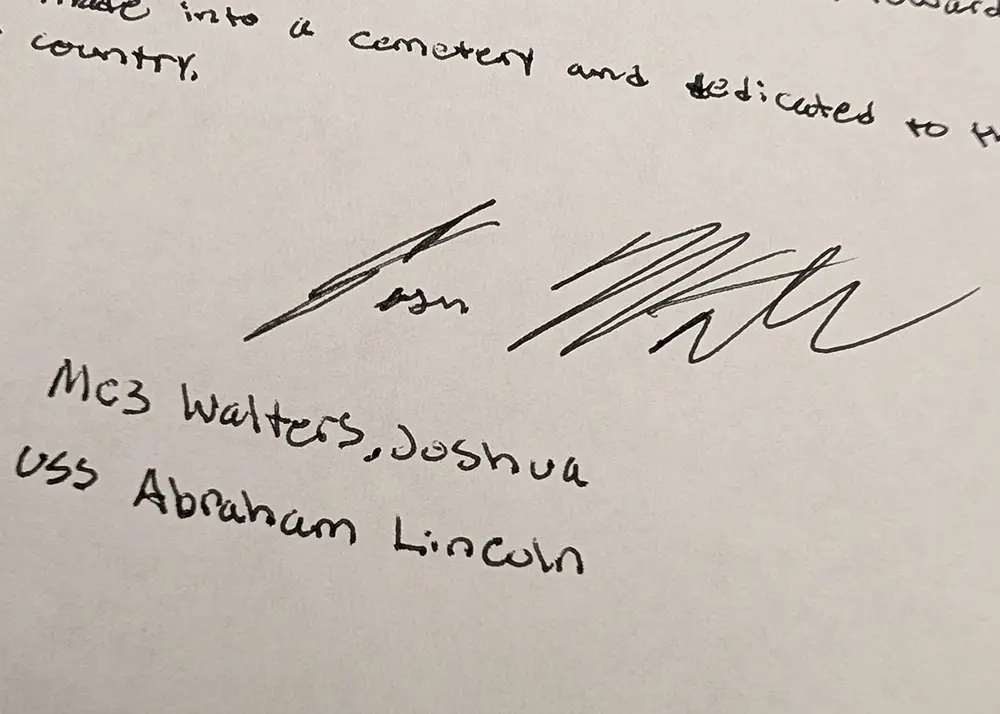
Joshua Walters was among the sailors who were struck by Lincoln’s focus on the sacrifice of the soldiers at Gettysburg and what that meant for the country’s future.
“He did not speak about the Union’s victory or significance of winning but wanted to honor the ones who sacrificed their lives. He saw the rebirth of a great nation and a step toward a new birth of freedom.”
Amanda Kilpatrick imagined Lincoln in the process of writing a speech for the opening of a cemetery for thousands of soldiers who died in service to their country.
“He paces his office, weighed down by heavy thoughts. He wonders how he is supposed to honor those who have fallen. How he was supposed to reassure his fellow Americans. His eyes tear up as he thinks of the 51,000 Confederate and Union soldiers, husbands, fathers and sons who were dead wounded or missing.”
Lincoln’s more prosaic accomplishments don’t often get attention, but they stuck out to Jonteil Johnson.
“During his time as a congressman, he fought for economic modernization in banking, urbanization of the country and protective tariffs for improvements, such as railroads and waterways.”
An assassin might have cut short Lincoln’s presidency, but Sean Hillier said his legacy lives on.
“Although Lincoln was taken from our world too early, the Gettysburg Address and all his acts as President will never be forgotten.”
Jeremy Crandall used his essay to tell Lincoln what the Gettysburg Address meant to him.
“Your words, they hit at the core of our being. You spoke of dedication and the birth of a new nation. The road was long and hard, but you inspired us. These deaths were not in vain and we never forget.”
William Blake drew a direct line from Lincoln’s accomplishments to the modern Navy. Lincoln and the Gettysburg Address posed a vital question for Americans today.
“Because of what Lincoln started 150 years ago, it enabled all men to be able to serve in the U.S. Navy, regardless of race.
“It’s men like Lincoln who help us to look at ourselves and ask: do we also have the honor, courage, and commitment to stand up for what is right?”
These essays belong to the ALPLM’s collection of manuscripts. Our manuscripts manager, Christopher Schnell, said, “In addition to having items from Lincoln and his world, we also preserve items that record his legacy – his era’s importance in American memory. The ‘272’ essays are important to understanding Lincoln and his address at Gettysburg because of what they say about how people today have internalized what he meant about the American Revolution and the rebirth of freedom in 1863.”
More of the 272-word essays can be found in the book “Gettysburg Replies.”