By Daniel Worthington and Christopher Wills
When you hear that Abraham Lincoln ran up $1,100 in debt as a young man, it sounds bad but not that bad. Like, “Everyone makes mistakes, so be more responsible next time, Abraham.” Then you remember that this was frontier Illinois in 1835, when cash was scarce and wages for an uneducated farm boy were almost zero.
What could that $1,100 have bought Lincoln back then? It was roughly the equivalent of 110 cows or 3,300 bushels of corn. He could have gotten more than a thousand acres of land. He could have rented a room for 21 years.
It’s even more amazing when you think of it in terms of wages. This was a place and time where a laborer might get a dollar a day. As a part-time postmaster, Lincoln earned about $55 a year. An Army blacksmith made just $120 a year. That $1,100 debt was the equivalent of $800,000 in wages today. (Our price comparisons come from a variety of lists found here. The equivalent wage figure is from the economics website MeasuringWorth.com.)
How does a 26-year-old get that deep in debt? Well, it wasn’t easy.
First, Lincoln bought a half-interest in a general store in little New Salem in 1832, but he did it on credit. The seller basically said, “Here, take my half of the store and pay me back later.” Lincoln was now a shopkeeper with a partner named William Berry. A few months later, the partners bought another store’s building and contents. They paid $265 in cash plus a horse and assumed debts of $377. So now Lincoln owed money for the first purchase and he owed half of $377 for the second purchase.
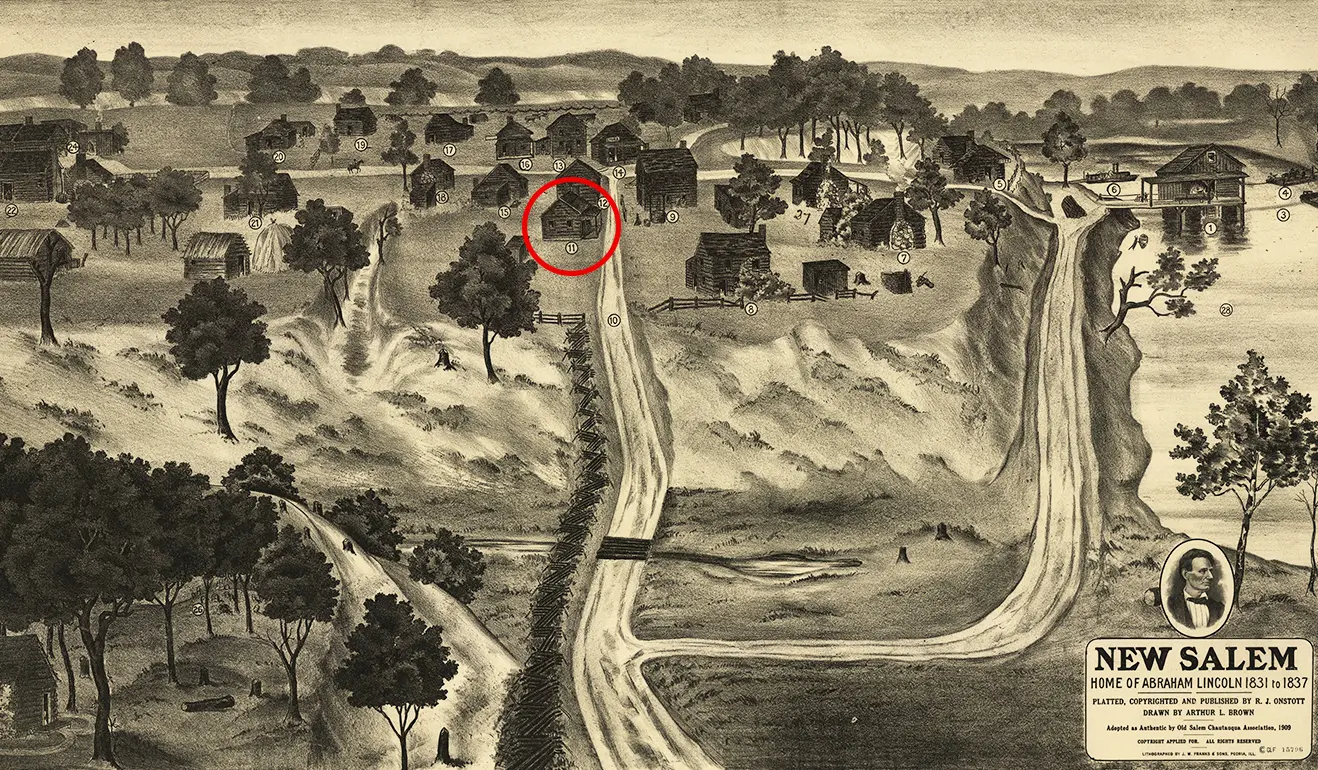 New Salem during Lincoln's era. The second Lincoln-Berry store is circled in red. (Library of Congress)
Lincoln's New Salem
 ×
×
Then in April 1833, Lincoln borrowed an additional $250. The reason is lost to history, but one likely explanation is that he used it to pay off his original loan for the store so he could get out of the shopkeeping business with Berry, who was a drunken, unreliable partner. So it seems Lincoln basically traded one debt for another. At the same time, Lincoln was trying to set himself up as a surveyor. He needed a horse, saddle and bridle, which he obtained for $57.86 – once again on credit.
While all this was going on there was a flurry of notes being assigned, creditors suing, and partial payments being made. Lincoln’s horse, saddle and surveying equipment were even auctioned off to pay part of his debts. Thankfully, a friend bought them and gave them back to Lincoln. (Lincoln eventually repaid his friend, James Short, and called him “as honorable a man as there is in the world.”)
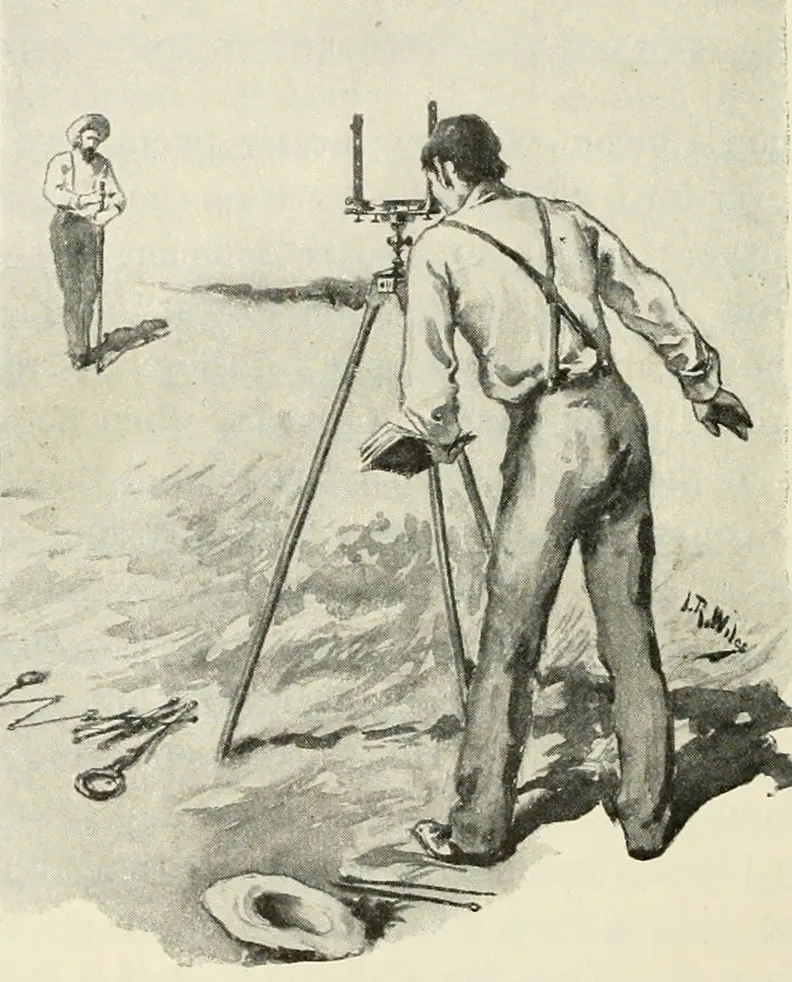 Lincoln as a surveyor.
Lincoln Surveying
×
To top everything off, Lincoln’s former partner, William Berry, died in 1835 at just 24 years old. His death has been attributed to malaria, tuberculosis and alcoholism. Lincoln probably could have made a case that he was no longer Berry’s partner and bore no responsibility for Berry’s remaining debts. In fact, Berry actually owed money to Lincoln. Instead, Lincoln agreed to pay the debt Berry had incurred in their joint business venture.
Between his own debts and Berry’s, Lincoln now faced a financial hole of $1,100. That’s the estimate of Harry Pratt, author of “The Personal Finances of Abraham Lincoln,” the most comprehensive book on the subject. “That debt was the greatest obstacle I have ever met in life,” Lincoln would tell a friend. “I had no way of speculating, and could not earn money except by labor, and to earn by labor eleven hundred dollars, besides my living, seemed the work of a lifetime.”
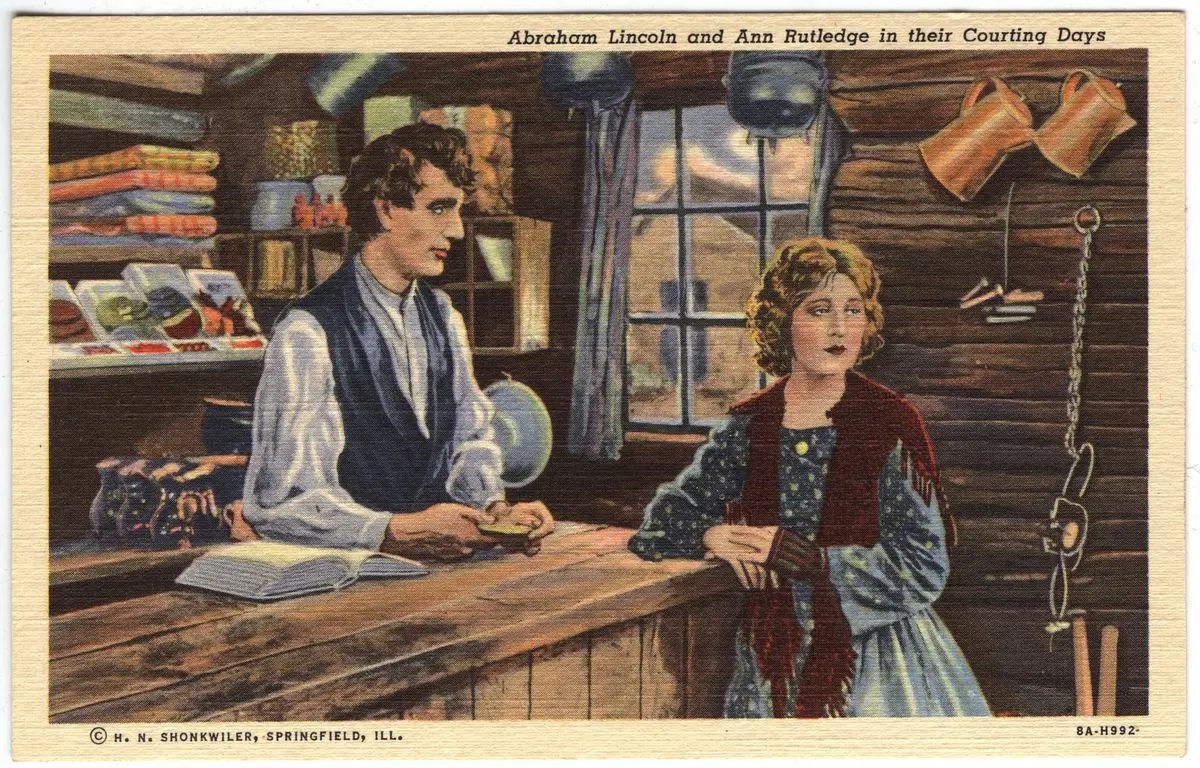
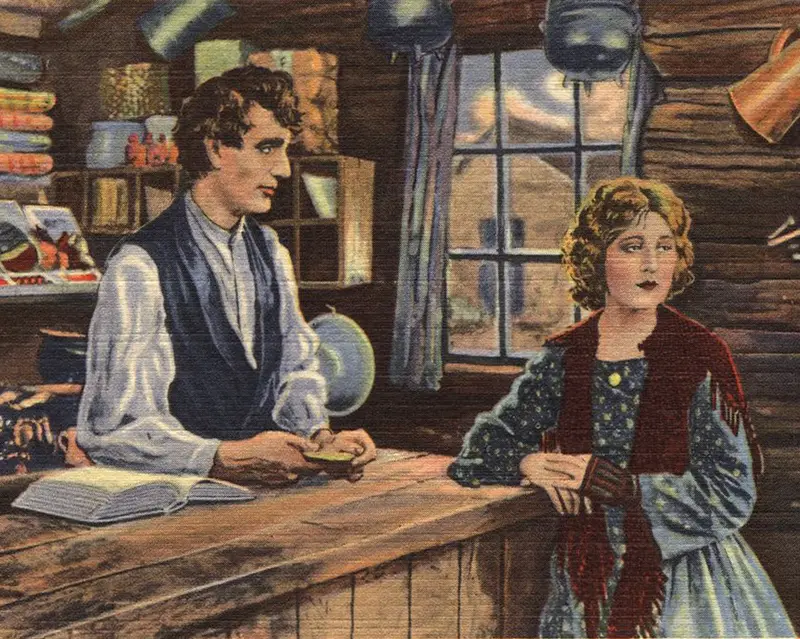 Lincoln with Ann Rutledge.
Imagining Lincoln with Ann Rutledge
×
Lincoln made a little money as New Salem’s postmaster. His surveying business was doing well, and he picked up odd jobs here and there, but his biggest source of income in those early years was payment for serving the in the Illinois House of Representatives -- $3 a day plus $3 for every 20 miles of travel to the capital and back when he was first elected. And, of course, Lincoln studied the law and slowly built a successful practice. Eventually, he was able to pay off the obligations that he called his “national debt.” When he accomplished that is unclear. Pratt argued Lincoln was out of the hole before being elected to Congress in 1847. Other historians believe he wasn’t free and clear until 1860, the year Lincoln was elected president.
Years later, Lincoln summed up his shopkeeping venture with Berry by saying the two of them “did nothing but get deeper and deeper in debt” until their store “winked out” of existence.
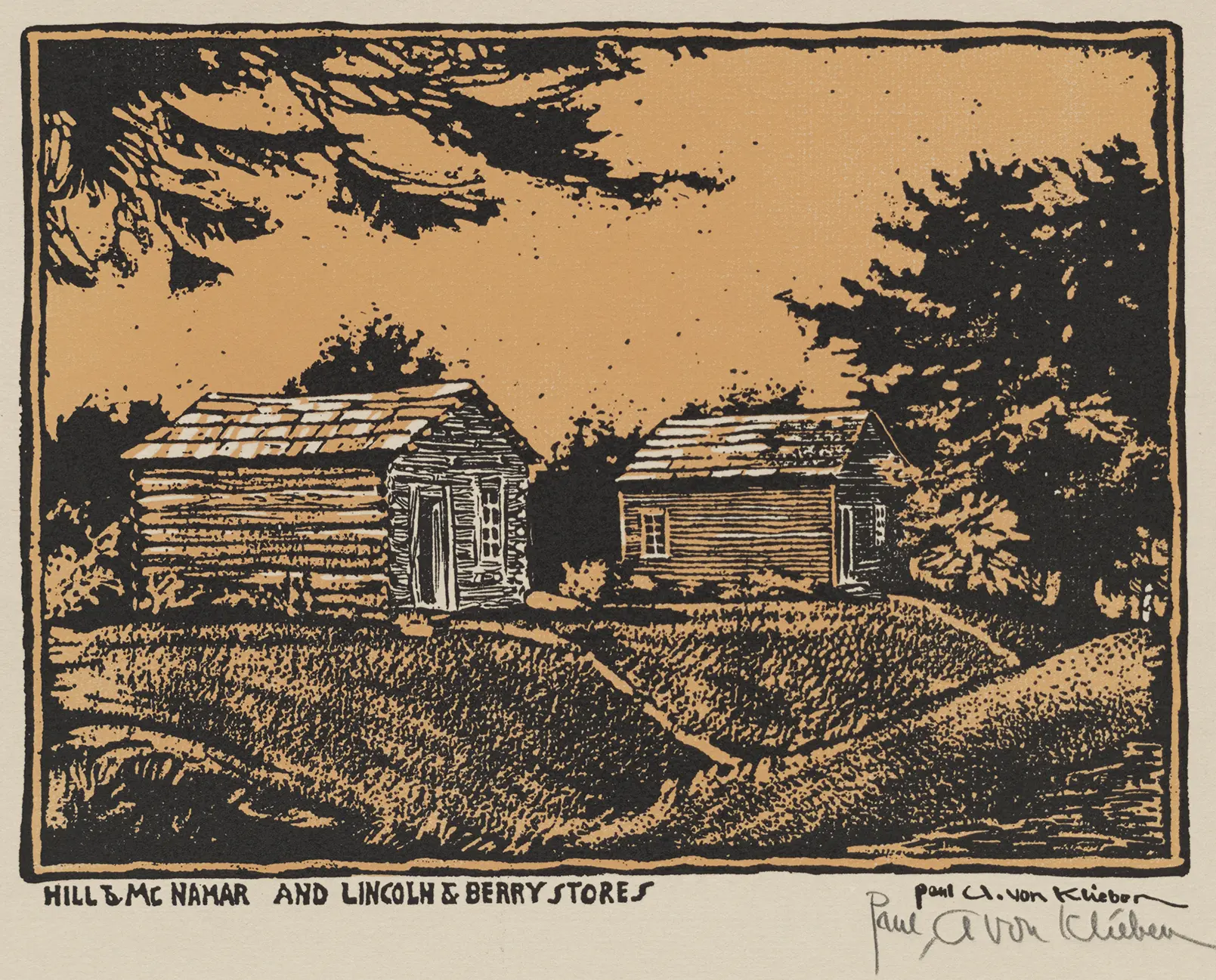
 A 1928 print by Paul A. Van Kieben depicting two New Salem stores, including the Lincoln-Berry Store.
Competing Stores
×
Worthington is director of the Papers of Abraham Lincoln.
Wills is ALPLM communications director.